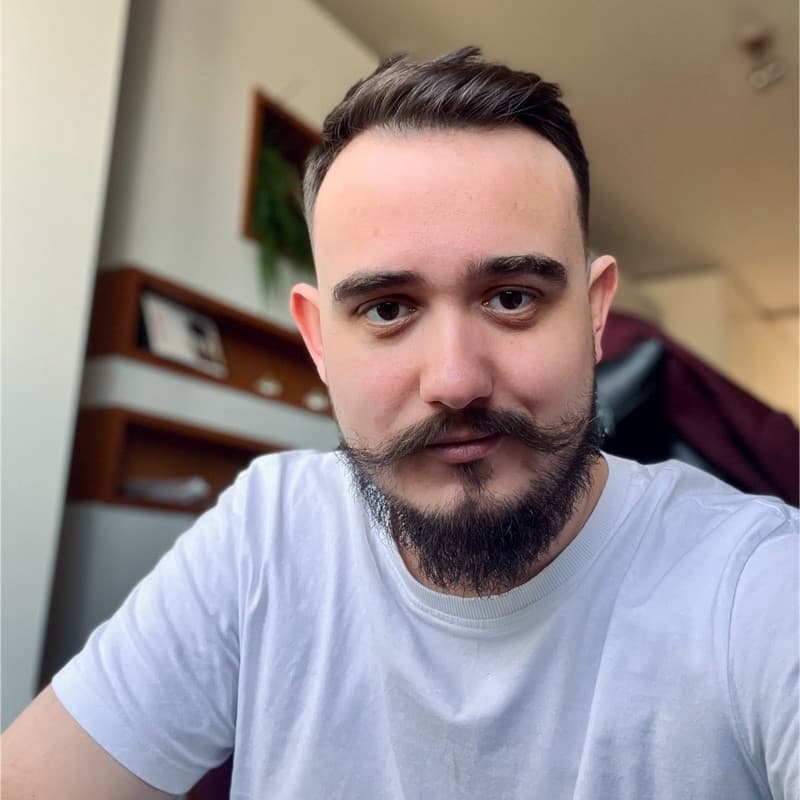
Maksym RudekGame Producer & studio co-founder

I build teams that run themselves, and the production process that lets them ship: a Nintendo Switch title certified twice, a premium mobile game, and a ~20-prototype pipeline with a global publisher.

Warsaw, Poland · CET · five years leading a fully-remote studio

By the numbers

10+
years in tech
5 yrs
fully-remote studio
12
people at peak team size
2
console certifications
~20
prototypes shipped
€80k+
average project budget

The path

What studios need → delivered

Read it top to bottom like a production log. Every node is tagged PEOPLE and/or PROCESS, and lists the producer capabilities it proves.

  1. Indeep Studios · co-founder & CEO · 2019–2023PEOPLEPROCESS

    Built a studio from zero

    No funding, no safety net — a studio scaled to twelve people, with its production, recruitment and operations processes designed from scratch.

    I co-founded the studio with zero external funding and ran it as CEO and producer for five years: planning, scoping, scheduling and the roadmap were mine, with no one else to hand any of it to.

    I built the production pipeline from scratch — milestone planning, sprint structure in Jira, task flows across design, art, dev and QA — and negotiated the publishing deals, budgets and staffing plans that kept it funded. A typical project ran €80–100k over 6–12 months.

    The team scaled between 3 and 12 people depending on the project — ten recruited in total, on a mix of full-time and part-time contracts, coordinated fully remote. A distributed team that size only works if it's genuinely self-organizing, so growth was individual: coaching people through the phase they were actually in, not where an org chart said they should be.

    • 12peak team
    • 10people recruited
    • €80–100kavg project
    • 6–12 modelivery
    Proves
    • Self-organizing teams
    • Hiring & coaching
    • Planning & roadmaps
    • Budgets & staffing
  2. Premium mobile · vision to releasePEOPLE

    Sole Light

    A premium mobile title carried on a single, clearly held vision from first concept to a paid release — featured on the Polish App Store.

    Sole Light was a paid premium game I owned end-to-end. There was no committee to align — the vision and the goal for what the game needed to be were mine to set and mine to keep transparent for anyone who touched it.

    Premium means players pay before they feel anything, so ambiguity about what the game was for was never an option. 5,000+ paid downloads say the vision held.

    • 5,000+paid downloads
    • featuredPolish App Store
    Sole Light — gameplay
    Proves
    • Clear vision & goals
  3. Nintendo Switch · published by QubicGamesPROCESS

    Pocket Pool + DLC

    Built for Nintendo Switch and expanded with DLC — both shipped through first-party certification, on deadline and on budget.

    Pocket Pool shipped on Nintendo Switch with QubicGames and reached tens of thousands of downloads, then I expanded it with a DLC release — a deliberate second delivery, not a live service.

    Both the base game and the DLC had to clear Nintendo's certification bar: performance, compliance, stability, submission — pass or resubmit. We met every deadline and budget constraint and resolved every certification issue with no prior Switch experience on the team. I negotiated the terms and ran all communication with the publisher and Nintendo.

    • 2Switch certifications
    • tens of thousandsdownloads
    Pocket Pool + DLC — gameplay
    Proves
    • Platform certification
  4. Publisher-side · production cadencePEOPLEPROCESSFlagship

    Kwalee — the prototype pipeline

    10 months, ~20 prototypes, a two-week cadence — incremental delivery, cross-functional Agile, and a real publisher relationship.

    For ten months I ran a prototype pipeline in collaboration with Kwalee: roughly twenty mobile prototypes, one every two weeks, with a five-person team. Every cycle had a build, a test, and a kill-or-carry decision — bottlenecks got found and cleared fast, because a two-week cadence leaves no room to let one sit.

    The team was small and cross-functional by necessity, and it only worked because people felt safe proposing a weird idea two days before the deadline. Leading that from the front meant being in the build with them, not just reviewing it.

    I was also the outward-facing producer on the developer-partner side of a global publisher — the meetings, the reporting, both sides' expectations and KPIs, and a relationship that had to survive a kill decision without turning adversarial.

    • ~20prototypes
    • 2 wkscadence
    • 5team
    • 10 moduration
    Prototype reel
    Proves
    • Leading from the front
    • Publisher & partner relations
    • Incremental delivery
    • Cross-functional Agile
  5. PC · engine & pipeline depthPROCESS

    Blitzdeck

    Systems-design depth close to the engine and pipeline — understanding the technical limitations well enough to plan around them.

    Blitzdeck is a PC rogue-lite deckbuilder where the interest lives in systems: synergies, pacing, run variance, and the engine-level tuning that makes a turn feel right.

    Getting that right meant working close enough to the engine and pipeline to know what was actually possible before scoping it — the same fluency a producer needs to plan around technical limitations instead of discovering them mid-sprint.

    • rogue-litesystems design
    Blitzdeck — gameplay
    Proves
    • Engine & pipeline fluency
  6. Outside games · 2016–2018, 2023–2026PROCESS

    Strategy & data, outside games

    IT consulting and fintech — an outside perspective, imported to question how things are usually done.

    Before, alongside and after the studio I worked in IT consulting and fintech: strategy, and data-driven decisions where the numbers had consequences. It's where the habit comes from — bring a perspective from outside the room, and use it to push back on “that's how it's always been done”.

    • $100k+projects
    • fintech+ consulting
    Proves
    • Data-driven decisions

Two tracks, one seat

PEOPLE+PROCESS

= GAME PRODUCER

A team that self-organizes, and a process that lets it ship.

How I produce

Principles, with receipts

What a producer is actually responsible for, matched to how I run it — and the evidence.

Form and nurture self-organizing teams

I hire for the bar and the mission, then get out of the way — a team that waits for instructions isn't self-organizing.

↳ Five years of a fully-remote studio that only worked because it ran itself between check-ins.

Own planning, scoping and roadmaps

The roadmap is the plan everyone can execute without me in the room — not a status update after the fact.

↳ Milestone planning and Jira sprint structure across design, art, dev and QA, for every release.

Hold the budget and the scope

Scope is the one lever that's always available — I'd rather cut a feature in week two than a corner in week twenty.

↳ €80–100k projects over 6–12 months; the Switch title and its DLC met every deadline and budget constraint.

Remove bottlenecks, deliver incrementally

A two-week cadence doesn't survive a bottleneck sitting for a sprint — I'd rather cut scope than let queues build.

↳ ~20 build/test/kill cycles on a two-week cadence with Kwalee, no cycle skipped.

Manage external partners with transparency

A partner relationship survives a kill decision if the reporting was honest before the decision, not just after.

↳ Reported directly to a global publisher through a pipeline built on kill-or-carry calls; ran publisher and Nintendo comms through two certifications.

Coach and grow the team

Real feedback, real ownership, and contracts that fit where someone actually is, not where the org chart says they should be.

↳ Grew ten people across mixed full-time and part-time engagements.

Team leadership

10
people recruited
3–12
team sizes led
FT + PT
contract mix
4
disciplines: design · art · dev · QA

Redacted production artifacts

  • Pitch deck
  • Game design doc
  • Staffing, timeline & budget

In their words

What it's like to work with me

I asked people I've worked with the same question, unscripted, 10–15 seconds each: what's it like to work with me?

Testimonials — in their words

Fit, at a glance

The capability matrix

What studios hire a producer for, each linked to the work that proves it. Hold it against your own job description — it takes under a minute.

PEOPLE

  • Build and nurture teams that organize themselves

    Built and ran self-organizing remote teams of 3–12 for five years.

    → Built a studio from zero
  • Grow the team in size and quality — recruit, coach, mentor

    Recruited and coached ten people across mixed full-time and part-time contracts.

    → Built a studio from zero
  • Lead from inside the work, and keep ideas safe to propose

    Led a five-person pod from inside the build, keeping ideas safe to propose under deadline pressure.

    → Kwalee — the prototype pipeline
  • Run the relationship with publishers and external partners

    Owned the relationship with a global publisher through reporting, KPIs and kill decisions.

    → Kwalee — the prototype pipeline
  • Keep vision and goals defined, transparent and understood

    Set and held a single clear vision from concept through a paid, featured release.

    → Sole Light

PROCESS

  • Own planning, scoping, scheduling and the roadmap

    Designed the studio's pipeline from scratch: milestones, Jira sprints, task flows across design, art, dev and QA.

    → Built a studio from zero
  • Own budgets, staffing plans and deal terms

    Structured budgets, staffing plans and deal terms for €80–100k projects.

    → Built a studio from zero
  • Find bottlenecks early and keep delivery incremental

    Found and cleared bottlenecks inside a two-week incremental-delivery cadence, ~20 times.

    → Kwalee — the prototype pipeline
  • Lead cross-functional teams in an Agile cadence

    Ran a small cross-functional team through a real Agile cadence, not a theoretical one.

    → Kwalee — the prototype pipeline
  • Ship through platform certification, on deadline

    Took Pocket Pool and its DLC through Nintendo certification, twice, on deadline and on budget.

    → Pocket Pool + DLC
  • Understand engine and pipeline limits well enough to plan around them

    Worked close enough to engine and pipeline to scope around real technical limitations, not assumed ones.

    → Blitzdeck
  • Bring data and an outside perspective to decisions

    Brought an outside-industry, data-first lens to argue for changes, not just execute the existing plan.

    → Strategy & data, outside games
Portrait of Maksym Rudek

The human

Who you'd be hiring

I'm Maksym Rudek — a game producer and studio co-founder based in Warsaw. I hold a degree in Video Game Production from Warsaw Film School, then learned the rest the hard way: five years running my own studio.

Off the clock I'm a street & documentary photographer, which is the same instinct as the work: watch closely, catch the real moment, cut everything else.

Based in
Warsaw, Poland (CET)
Looking for
Producer & production-lead roles in games
Working mode
Remote, hybrid, or on-site in Warsaw
Languages
Polish (native) · English (C1)
Education
BA, Video Game Production — Warsaw Film School
Favourite game
RimWorld

Next move

Let's get in touch

Email me

Anonymised heatmaps via Microsoft Clarity — loaded only if you accept. Privacy & cookies.